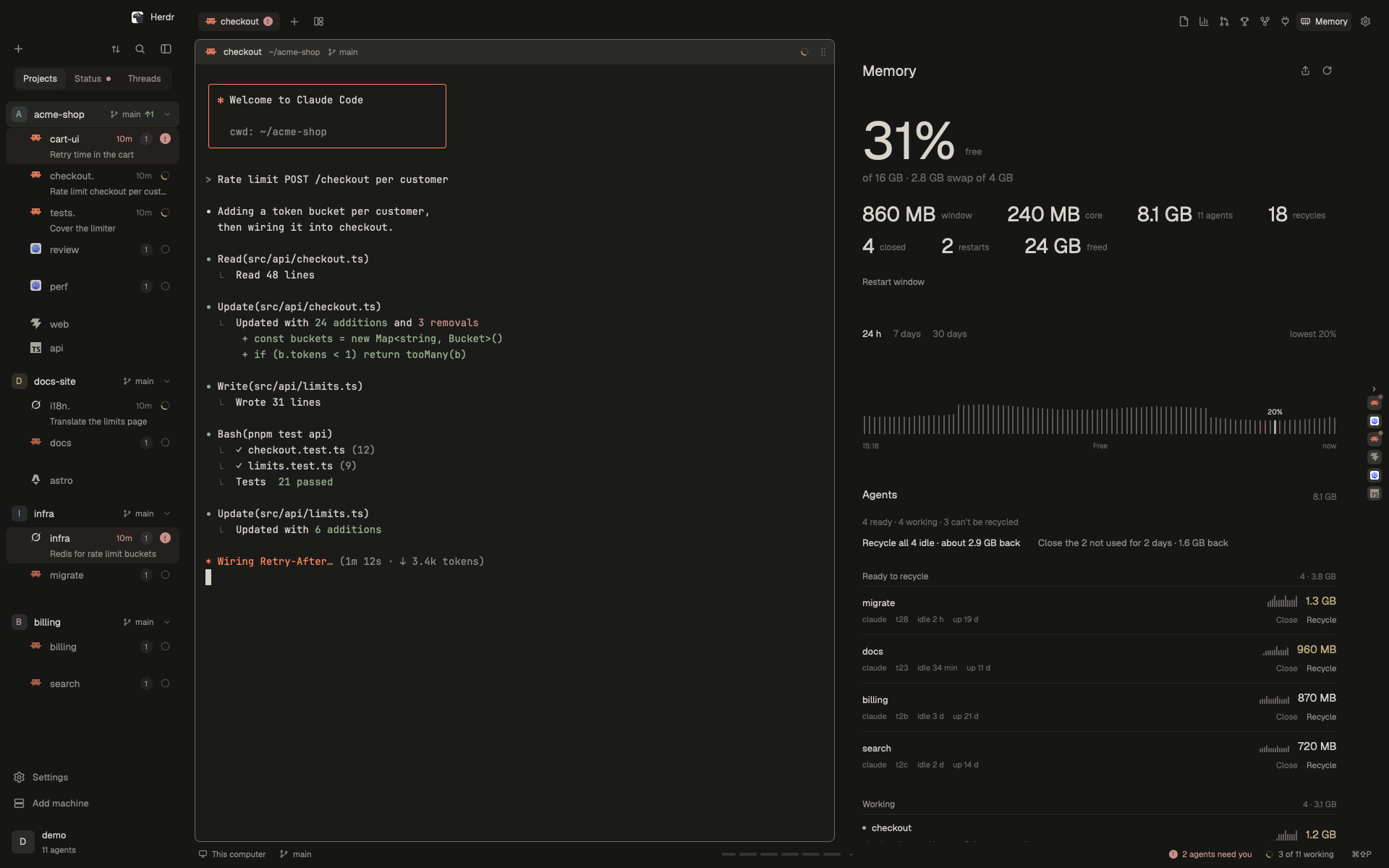
A strip, not a grid
Each terminal keeps its width. New panes open beside the one you are in and the view glides to it. Nothing gets squeezed.
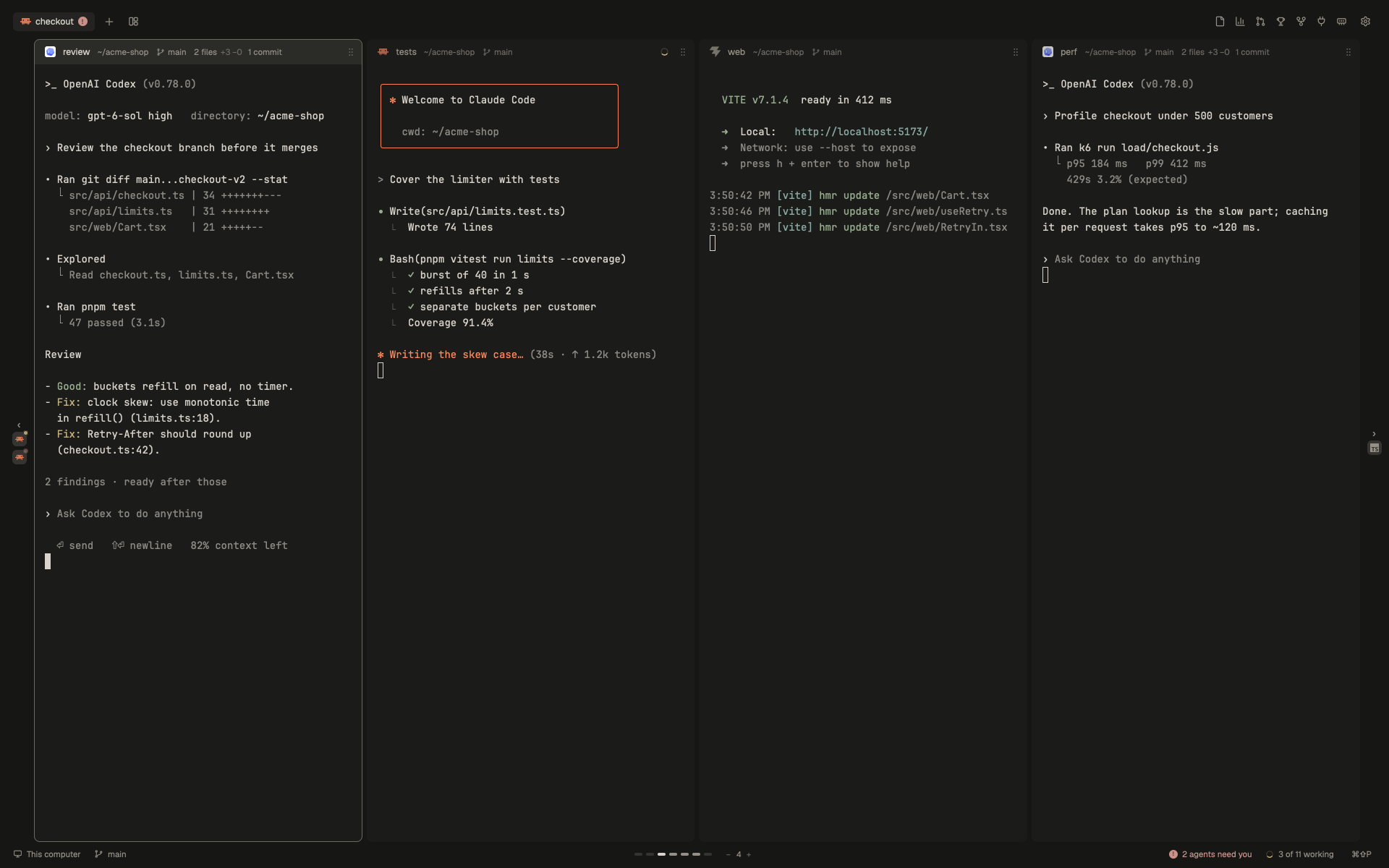
Every agent gets a readable pane, the one waiting on you comes first, and idle Claude Code sessions recycle on the same conversation so your machine lasts weeks.
Free and open source. A layout for Herdr on macOS.
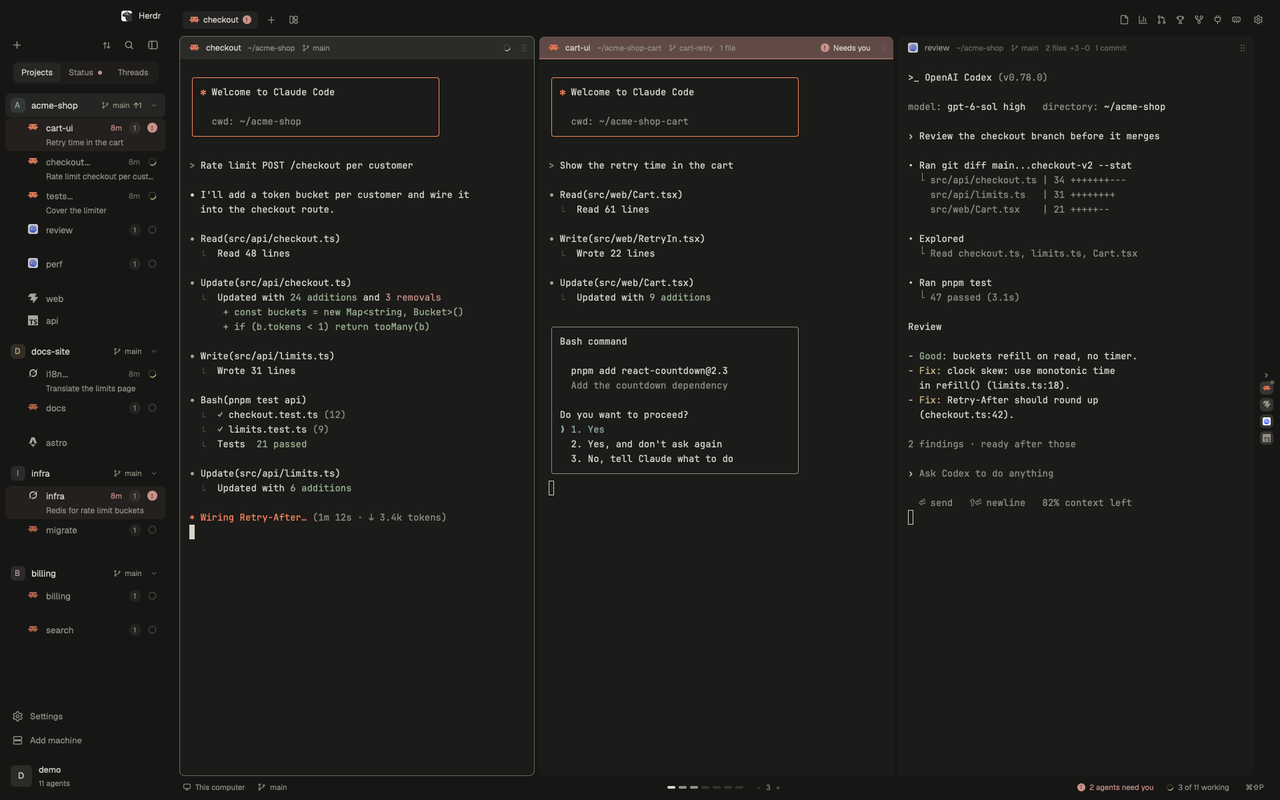
Works with the agents and editors you already use
No config files to write. Your agent does it, and kansō tells you when an update is ready.
Paste this into Claude Code, Codex or any agent running in Herdr.
add herdr.dev/layouts/jlopezlira/herdr-kanso--kanso
Your terminals and agents keep running. The sidebar, the strip and the panels appear around them.
Open as many agents as you like. Turn on the guard in Memory once, and kansō keeps long sessions light.
Panels open beside the strip and only work while you look at them.
Each terminal keeps its width. New panes open beside the one you are in and the view glides to it. Nothing gets squeezed.
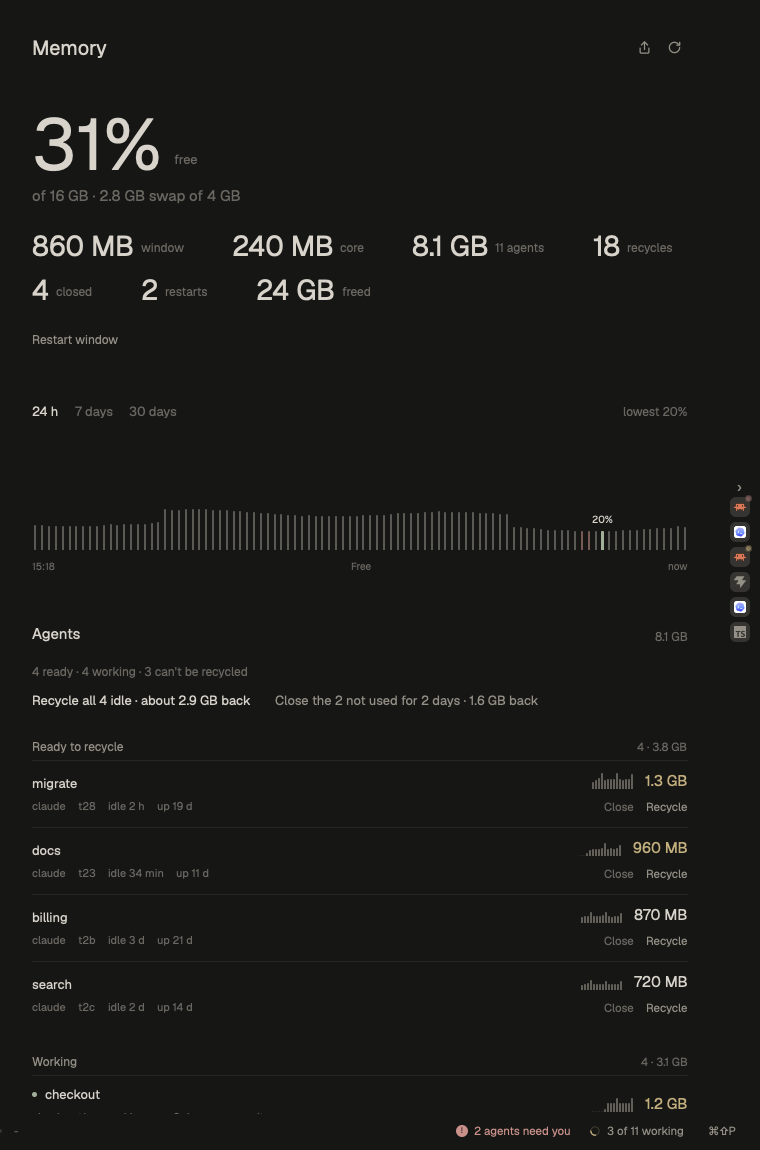
Every agent's size and history. Recycle or close the idle ones from the panel.
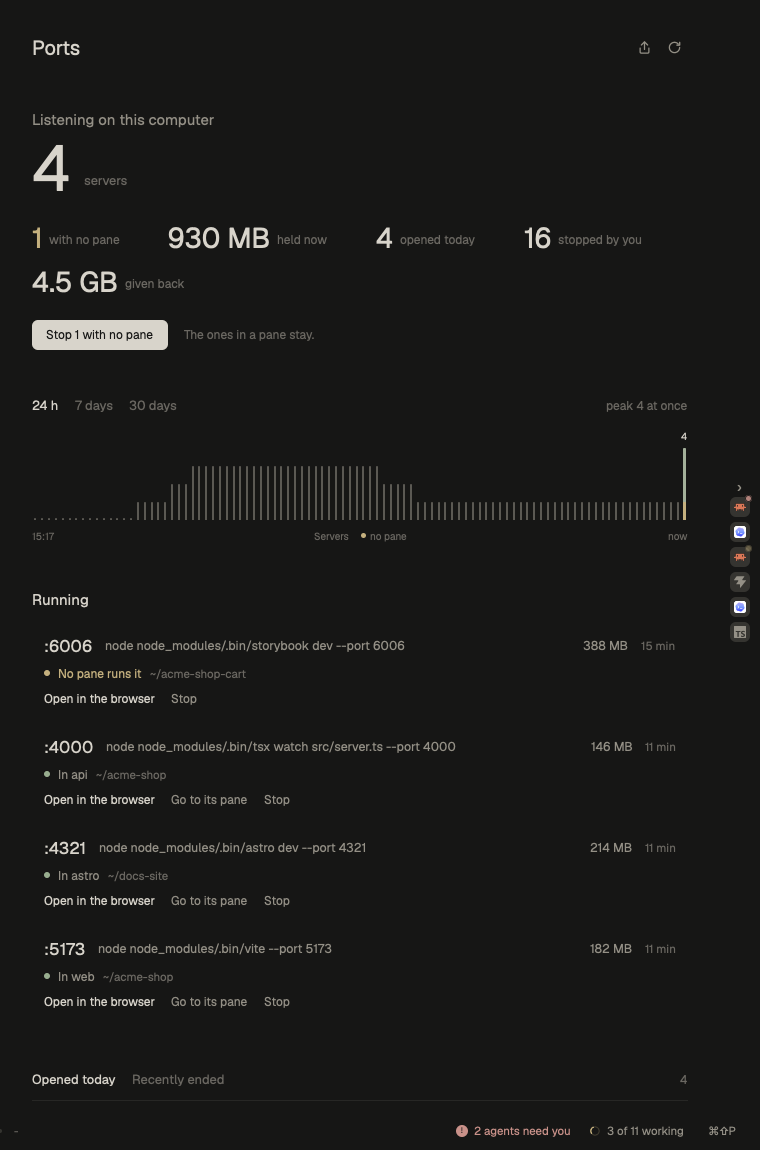
Dev servers your agents started, which pane runs each one, and the ones left behind.
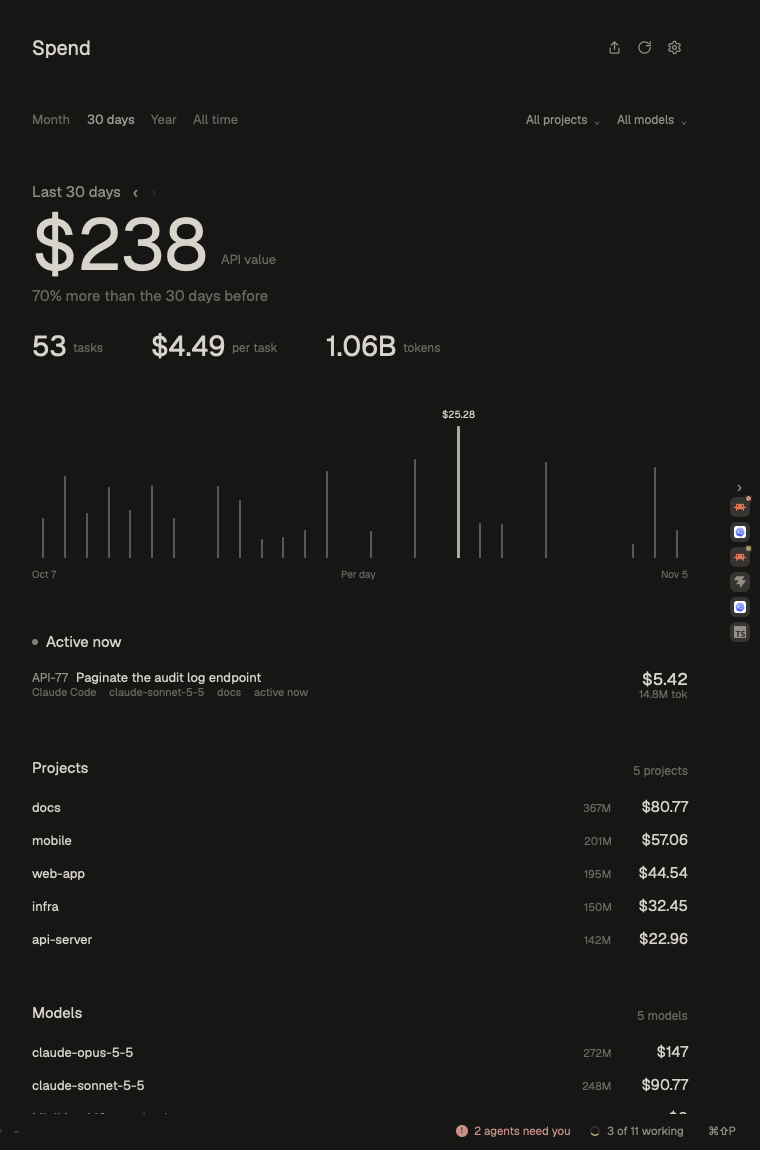
What your AI work is worth at list price, per project, model and task.
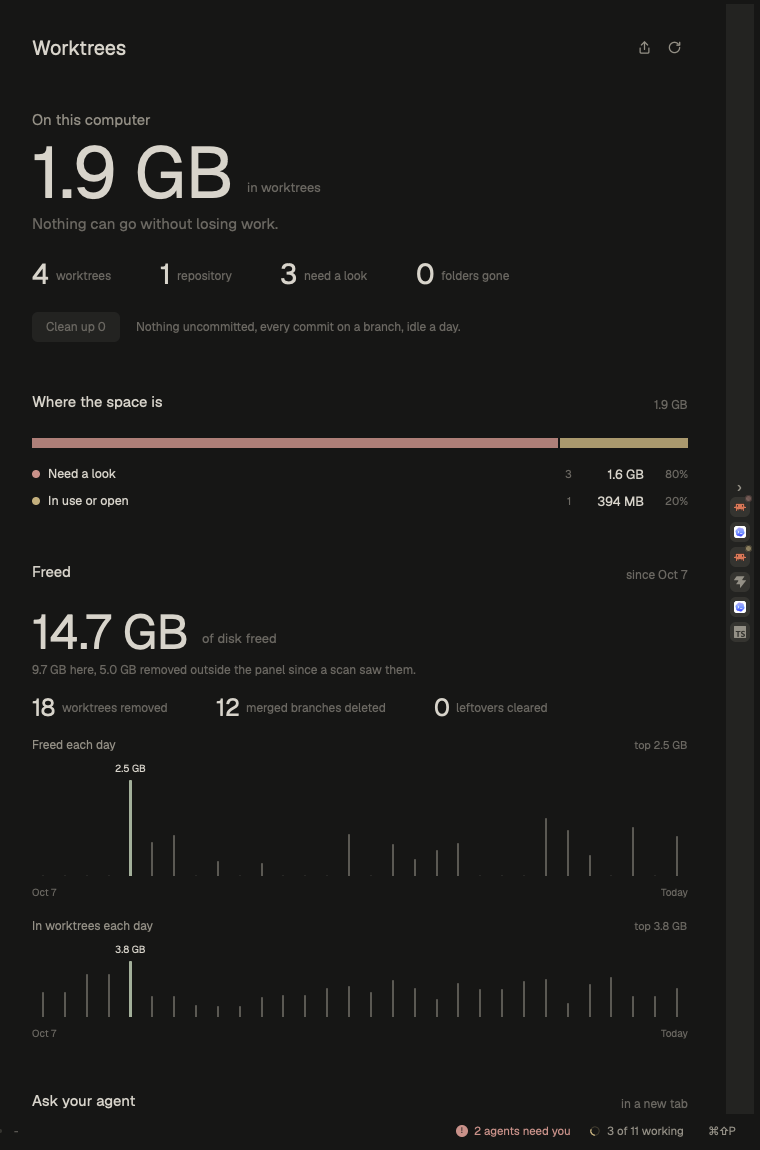
Every worktree agents made, what removing it would lose, and the disk it gives back.
Waiting on a backend ticket? Sleep the agents that wait on it. They exit with their conversation kept, so nothing of them runs or holds memory, and wake tomorrow on the same conversation.
⌘⌥ h j k l move between panes as vim does, and every list answers j, k, gg and G. ⌘? draws your own keys on a keyboard, layer by modifier.
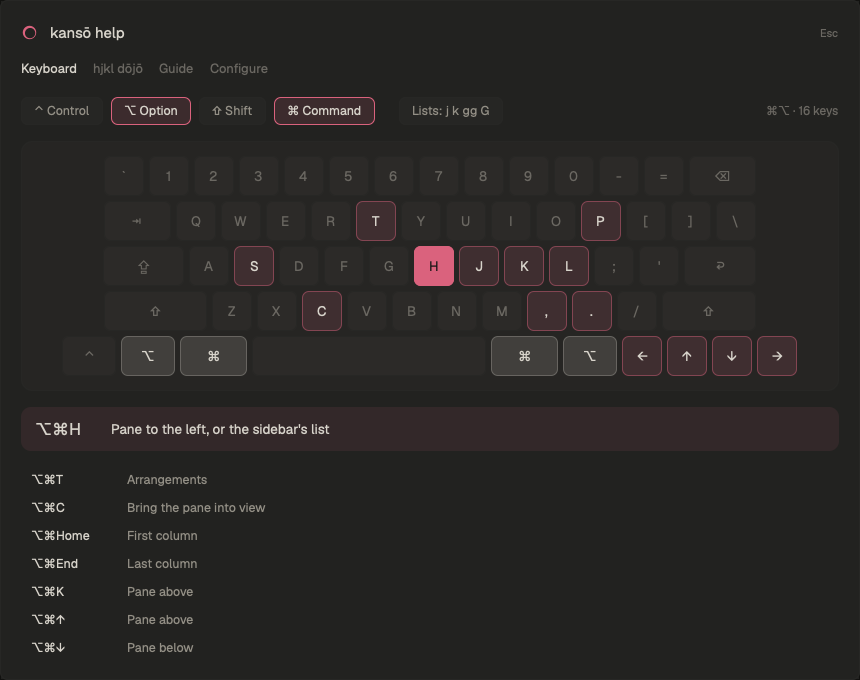
Hold ⌘ ⌥ ⇧ ⌃, or press a chord, and the keys that do something light up with what they do. A guide to everything, and where to set it up.
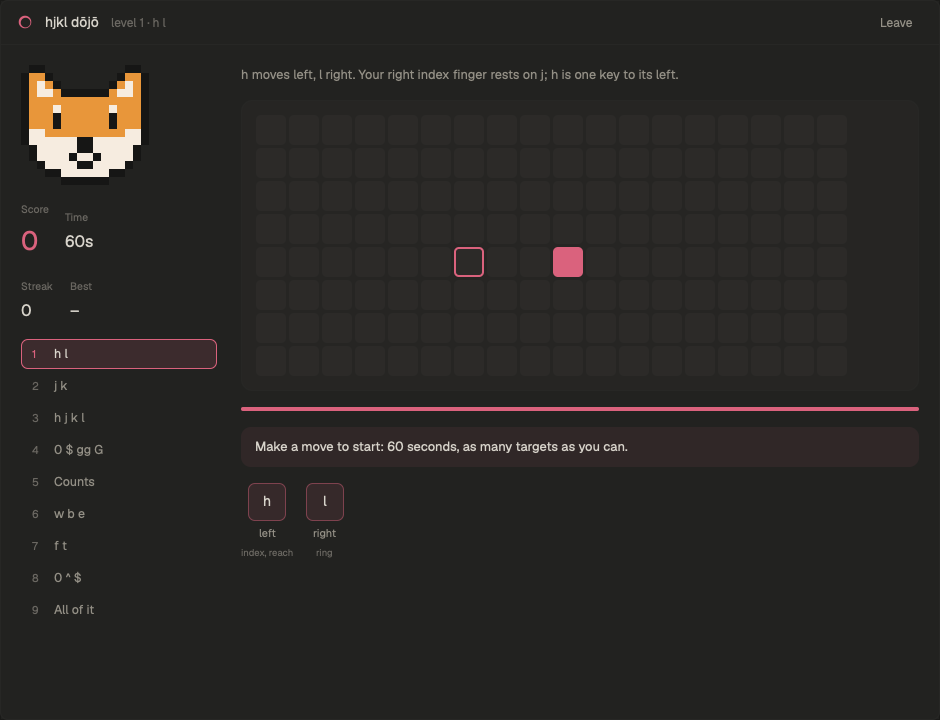
Nine levels, from h and l on a board to w b e, f t and gg G on real lines of code. Rounds of ten targets, points for the fewest moves, a hint when you stop to think, and Hachi cheering a streak.
Agents that stay open for weeks grow. kansō's guard checks every minute and cleans up without losing a conversation.
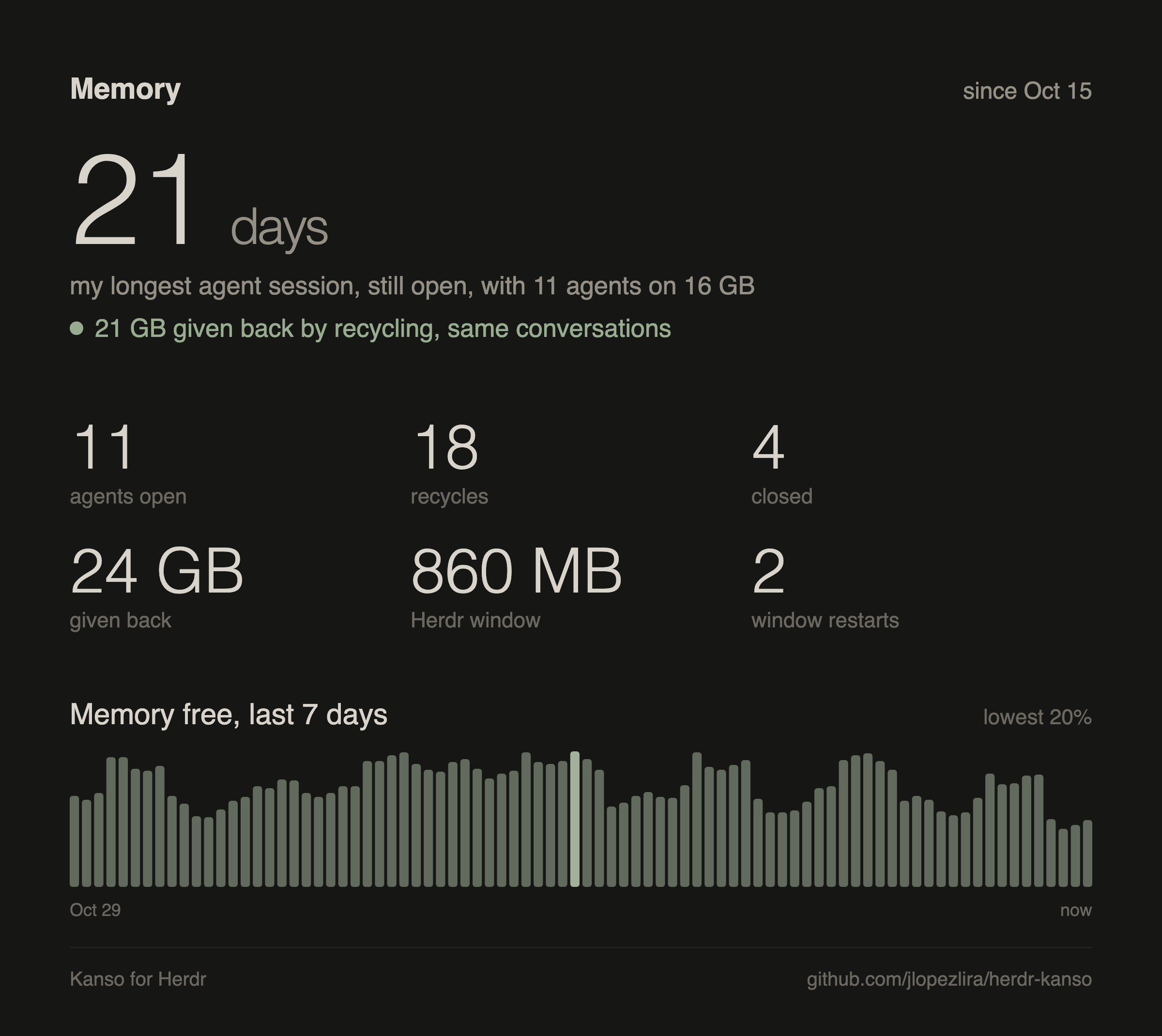
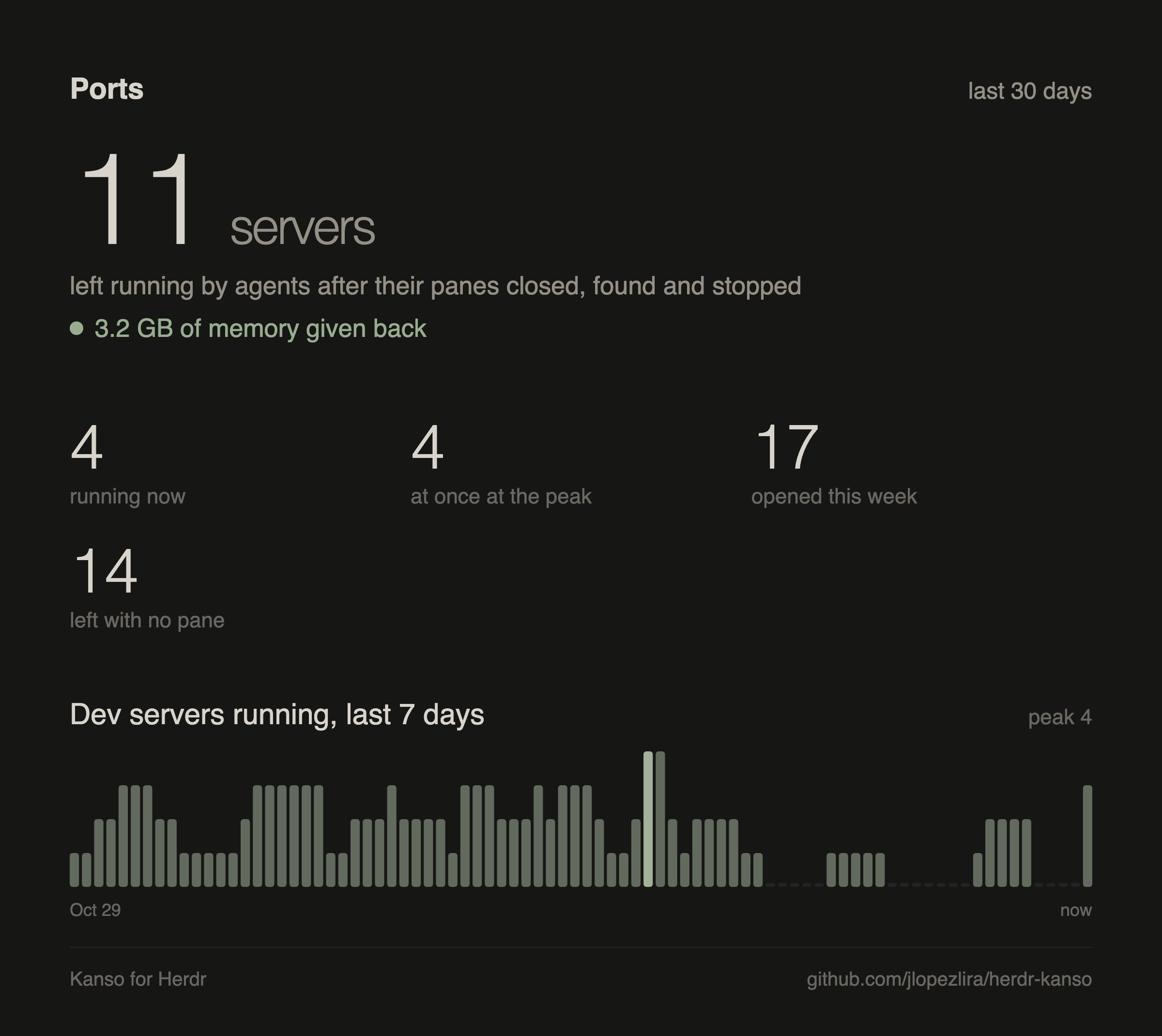
Memory, Ports, Spend, Shipped and the hjkl dōjō turn your numbers into a card for X, LinkedIn or Bluesky. Counts and sizes only, never a project or a path.

Free and open source, Apache-2.0. Tell your agent:
add herdr.dev/layouts/jlopezlira/herdr-kanso--kanso